



Collections management systems and digital archives for museums, foundations and nonprofits.
We build the custom software a museum, archive or foundation uses to catalog, manage and publish its collection, from the tools its staff use every day to the public website where researchers find and cite it.
Clients we've proudly served
Archives and cultural heritage
Blavatnik Archive Foundation
The collections management system behind a large historical archive, the public digital archive websites built on it, and the Refuseniks and Activists project.
Read the case studyblavatnikarchive.org
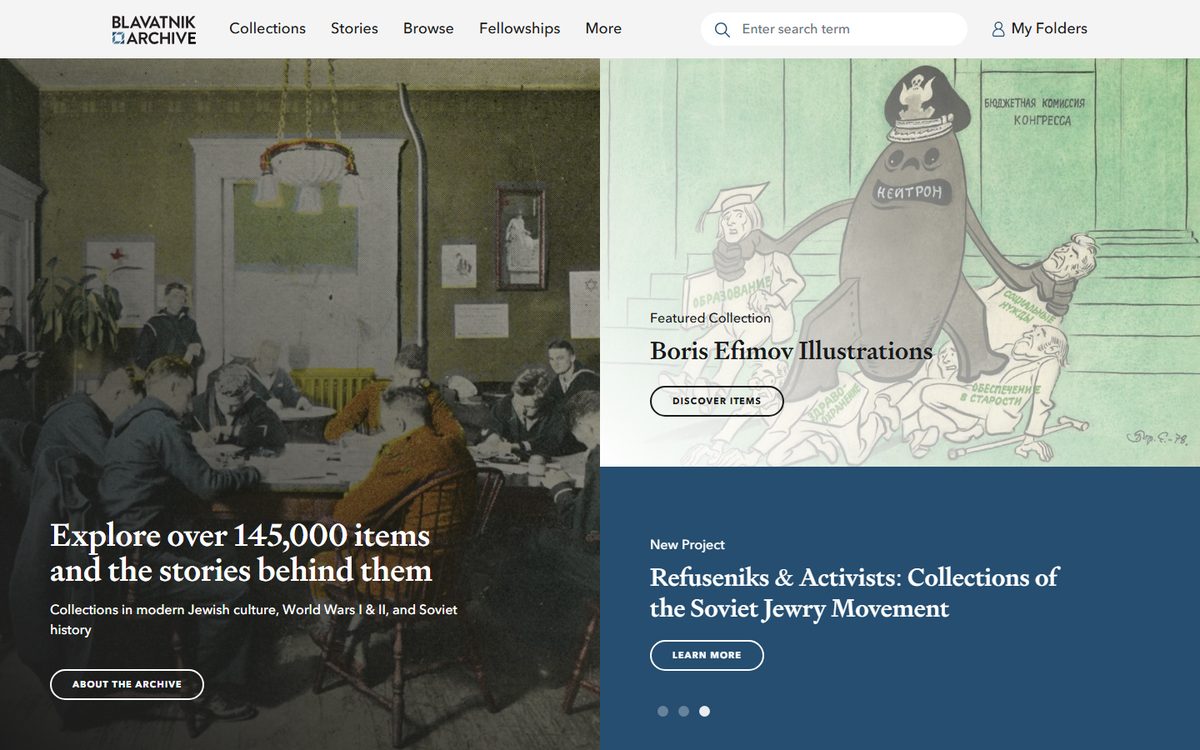
blavatnikarchive.org 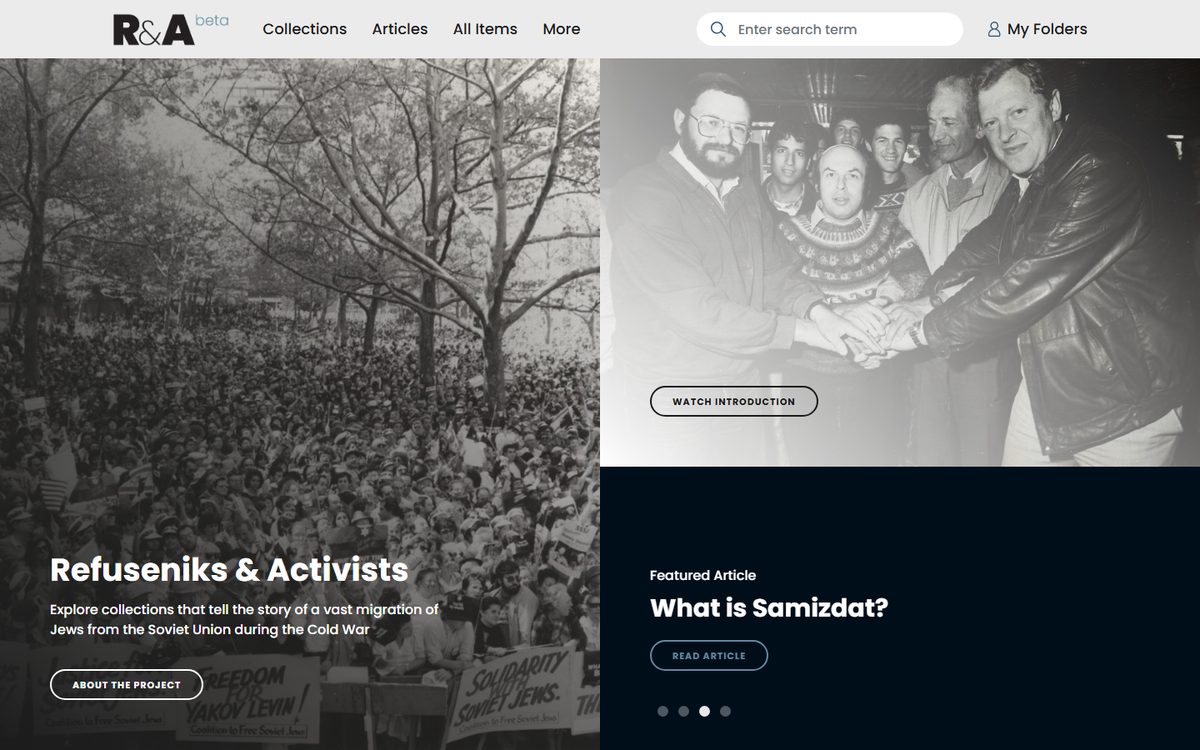
refuseniksactivists.org Public websites designed with the foundation's design partners. The software behind them is built and supported by IT Comrade.
Archives and memorials
Babyn Yar Holocaust Memorial Center
The collections management system the Blavatnik Archive Foundation donated to the Center, which we set up on AWS and customized for its archive, including transcripts in more than one language.
Read the case studybabynyar.org
Policy research and archives
Woodrow Wilson International Center for Scholars
A digital archive for three international history projects with a contributor and translation portal, and the Center's system for fellowships, scholarships, events, publications and contacts.
Read the case studywilsoncenter.org
International development
NCBA CLUSA
Six business applications, from payroll reconciliation to budgets, built around the organization's finance system.
Read the case studyncbaclusa.coop
A collections management system has five parts. We build all five.
They have to work together, as one system your own staff can run.
Organize
One data model
Existing catalogs, spreadsheets and your scanning vendor's files are mapped to one model for items, people, places and rights.
Manage
The catalog
Staff describe and edit records in one place. Transcription and text recognition give them a first draft.
Control access
Review and approval
Roles and permissions decide who can catalog, review and publish. Nothing goes public until it is approved.
Search
The published index
Approved records are added to a search index. Unpublished records never enter it.
Present
The public website
Researchers search, zoom into images and cite items, all from the published index.
We don't scan or digitize material. We build the software that holds and publishes it.
More about collections management systems and digital archives
Other systems we build
We also build grant and scholarship systems, project and program management tools, monitoring and evaluation (M&E) systems, survey analysis systems and finance integrations, and the custom applications that hold them together.
Grants, scholarships, programs and M&E
Grant and scholarship management, project and program management, and monitoring and evaluation (M&E), with the reports that boards and funders expect.
Finance integration and reporting
Connections between program systems and the finance system you already run, so data is entered once and the reports agree.
Custom systems and long-term support
Software for work that off-the-shelf tools don't fit, careful upgrades of aging systems, and support from the people who built them.
Survey analysis
A system that imported about 90 surveys for an international research organization, with cross-tabulations, filters, comparisons across countries and years, and exports to Excel and charts.
Archively
Archively is an AI-assisted archive platform. Its AI proposes metadata and transcripts, and your staff review and approve each one before it becomes part of the record. IT Comrade brings Archively to organizations in the United States.
What we do around Archively
- Evaluation using a sample of your own records
- Planning and budgeting
- Help preparing your records to move from your current system
- Help with training, and a point of contact in the United States
Who we work with
Museums, archives and cultural foundations, policy institutes, fellowship funders, and nonprofits working in international development. Most have important collections or programs and a small technology team.
Organizations our team has served since 2006
- Blavatnik Archive Foundation
- NCBA CLUSA
- Babyn Yar Holocaust Memorial Center
- Woodrow Wilson International Center for Scholars
- US Department of State, Bureau of Educational and Cultural Affairs (exchange programs)
- US Agency for International Development
- Academy for Educational Development
How a project runs
Every project starts with a defined first piece of work, agreed in writing. We build it with your staff and test it with real data. When it is time to switch over, we move your data and check it against the old system.
Then we stay. Most of our work is maintaining and improving systems year after year, as the organizations that use them change.